SALVATION

25 I do not want you to be ignorant of this mystery, brothers and sisters, so that you may not be conceited: Israel has experienced a hardening in part until the full number of the Gentiles has come in, 26 and in this way all Israel will be saved. As it is written: “The deliverer will come from Zion; He will turn godlessness away from Jacob. 27 And this is my covenant with them when I take away their sins.” 28 As far as the gospel is concerned, they are enemies for your sake; but as far as election is concerned, they are loved on account of the patriarchs, 29 for God’s gifts, and his call are irrevocable. 30 Just as you who were at one time disobedient to God have now received mercy as a result of their disobedience, 31 so they too have now become disobedient so that they too may now receive mercy as a result of God’s mercy to you. 32 For God has bound everyone over to disobedience so that he may have mercy on them all.
Romans 11:25-28
In Romans 11:25-32, the Apostle Paul examines the theological mystery of Israel’s spiritual hardening and the subsequent inclusion of Gentiles within God’s redemptive framework. He explains that, for a time, Israel was hardened in part to facilitate the entrance of the Gentiles into the faith, fulfilling God’s plan to bring salvation to all. Paul emphasizes that this hardening is not permanent; rather, it serves a greater purpose in God’s divine timeline. Indeed, he argues that God’s promises remain intact and that there is always a remnant chosen by grace (Rom 11:1-2).
Paul specifies that, despite their current state as enemies of the gospel for the sake of the Gentiles, the Jewish people are still beloved by God because of their patriarchs (Abraham, Isaac, and Jacob). Despite the widespread rejection of Jesus as the Messiah among many in Israel, Paul reminds readers of the significant advantages that come with being part of God’s covenant people. They possess the covenants (including the Abrahamic, Mosaic, and Davidic), the Law, temple worship, and the many promises God made to them throughout their history (cf. Romans 9:4-5).
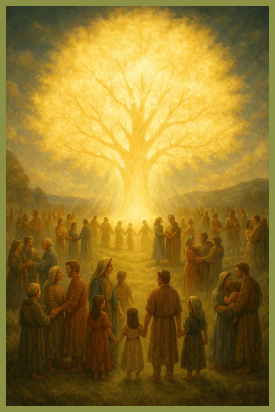
Paul cautions Gentiles against arrogance, reminding them that their inclusion in God’s family is solely due to His grace and mercy. They should recognize that their ability to stand firm in faith stems from the root of Israel’s heritage. He warns that just as they were grafted in, they too can be cut off if they do not continue in faith, and he assures that Israel has the potential for restoration (cf. Romans 11:20-22).
He uses an agricultural metaphor in which Gentiles are likened to wild olive branches grafted into the cultivated olive tree, symbolizing the Israelite heritage rooted in God’s covenant with Abraham. Meanwhile, some of the natural branches, representing unbelieving Jews, have been broken off due to their disbelief. Yet, Paul emphasizes that the root—a symbol of God’s covenantal promises—remains, supporting both branches (cf. Romans 11:17-24). Ultimately, this passage underscores the belief that God’s mercy extends to all, and that both Jews and Gentiles will be united in redemption through faith in Christ.
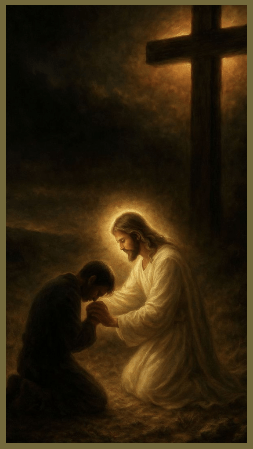
This underscores God’s faithfulness to His covenant and the irrevocability of His gifts and calling. He highlights a transformative dynamic in God’s mercy. Just as the Gentiles, who were once disobedient, have received mercy because of Israel’s disobedience, Israel, too, will receive mercy. This underscores that God’s plan encompasses all of humanity, bound together by disobedience but redeemed by His mercy.
The passage concludes with the profound statement that God has “bound everyone over to disobedience.” This suggests that all humans, Jew and Gentile alike, share a common condition of sinfulness, which ultimately sets the stage for God’s inclusive mercy. It affirms that God’s grace is available to all who believe, emphasizing His desire for reconciliation with humanity as a whole.
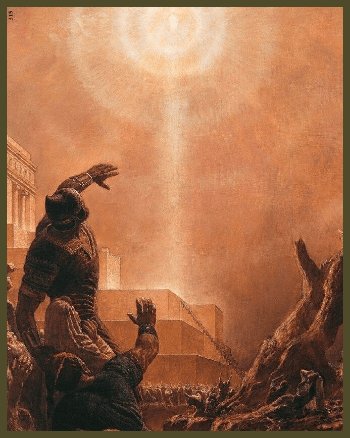
Dispensationalism and Covenant Theology represent two fundamentally different theological frameworks that help believers interpret the Bible and understand God’s plan. The primary points of divergence between these two systems center on their views of the relationship between Israel and the Church, the fulfillment of biblical prophecy, and the interpretation of God’s covenants. Both Covenant Theology and Dispensationalism are Protestant in origin. Still, Covenant Theology is much older, dating back to the Reformation (Calvin, Zwingli). At the same time, Dispensationalism is a 19th-century development (J.N. Darby) that popularized a distinct view of separate Israel/Church futures, contrasting with the historic Protestant emphasis on continuity through covenants.
Dispensationalism asserts a clear distinction between Israel and the Church, maintaining that these two groups have separate roles and destinies in God’s redemptive plan. This framework is characterized by a belief in a series of “dispensations” or periods in which God interacts with humanity in different ways. Dispensationalists hold that many prophecies concerning Israel remain unfulfilled and await a future realization, particularly regarding a restored national Israel and a literal earthly reign of Christ during the Millennium. As a result, this view emphasizes a more future-oriented hope for Israel specifically, with a belief in an imminent rapture of the Church followed by a time of tribulation and the eventual establishment of God’s kingdom on Earth.
On the otherhand, Covenant Theology posits a single, continuous people of God, comprising both Israel and the Church, unified in purpose and spiritual heritage. This theological perspective emphasizes that many promises in the Old Testament are not to be understood literally but rather as fulfilled through Jesus Christ and the ongoing work of the Church. Covenant theologians argue that God’s covenants with His people — such as the Abrahamic, Mosaic, and Davidic covenants — ultimately find their completion in the new covenant established through Christ’s life, death, and resurrection.
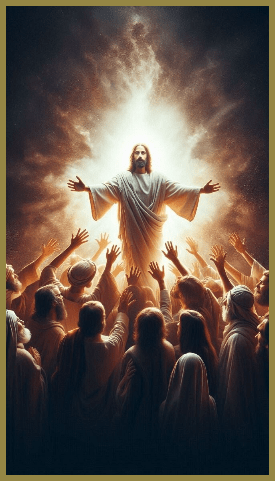
The Catholic Church doesn’t align strictly with Protestant dispensationalism or classic covenant theology; instead, it holds a unique position, acknowledging the unbreakable covenant God made with Israel while affirming the New Covenant in Christ through Vatican II’s Lumen Gentium, moving away from older “replacement theology” (supersessionism) by seeing God’s promises to Israel as still valid, though interpreted within Christ’s New Covenant framework, rather than a distinct future national restoration like dispensationalism.
The Catholic Church teaches that God’s covenant with the Jewish people remains valid and unbroken, rejecting the idea of “replacement theology” where Jews are seen as rejected or accursed after not accepting Jesus as Messiah. Instead, drawing on Vatican II and Popes such as John Paul II, the Church affirms that God’s gifts and call to Israel are irrevocable (Romans 11:29) and that Jews remain God’s chosen people, holding a unique spiritual heritage. However, the Church awaits their eventual acceptance of Christ before His Second Coming.
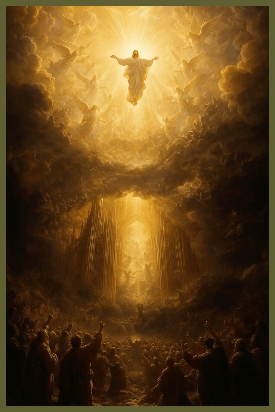
Nostra Aetate (Vatican II) explicitly rejects that the Jewish people, as a whole, were rejected or accursed by God, emphasizing their enduring bond. The Catechism of the Catholic Church (CCC 839-840) states that God’s covenant with Israel was never revoked, and the Church awaits their acceptance of Christ. Pope John Paul II: Affirmed the enduring covenant, calling Jews the “people of God of the Old Covenant, which has never been abrogated by God. Pope Benedict XVI reiterated this, noting the “unbroken and indeed unbreakable” covenant, citing St. Paul’s teaching in Romans 11:29.
Thus, the Catholic Church maintains that God’s promises to Israel are permanent, even if some Jews did not recognize Jesus as the Messiah. The Magisterium officially rejects the idea that the Church has replaced Israel as God’s chosen people (supersessionism/replacement theology). The Jews are considered the “people of God of the Old Covenant,” sharing a profound spiritual patrimony with Christians. The Church holds that the conversion of Israel will occur before Christ’s return, thereby fulfilling Old Testament prophecies. In essence, the Church views the Jewish people as continuing in their unique relationship with God and holding a vital role in salvation history, even as they await the fulfillment of the messianic promises in Christ.
PAX VOBISCUM
 Eternally Catholic
Leave a comment