
The Sacrament of Confirmation

In him you also, when you had heard the word of truth, the gospel of your salvation,
and had believed in him, were marked with the seal of the promised Holy Spirit;
Ephesians 1, 13
In Catholic teaching, a sacrament is understood as a tangible sign that signifies an invisible spiritual reality. It serves as a conduit of divine grace, marking a significant event in a Christian’s life, particularly at the initiation into the faith. Sacraments encompass both physical and spiritual dimensions. For example, the Sacrament of Baptism involves the physical element of water, which can be applied by either pouring over the recipient’s head or through immersion. Spiritually, this water symbolizes the washing away of the soul’s original sin, facilitated by the Holy Spirit. As a result, the individual’s soul is sanctified and healed, restoring their relationship with God and transforming them from being a child of Adam to an adopted child of God. To partake in a sacrament, the recipient’s faith is essential. Each sacrament serves to nourish and strengthen the soul, enabling the individual to express their faith in conjunction with the elements of the sacrament.
According to the Catholic Dictionary, a sacrament is “a sensible sign, instituted by Jesus Christ, by which invisible grace and inward sanctification are communicated to the soul. The essential elements of a sacrament of the New Law are institution by Christ the God-man during his visible stay on earth and a sensibly perceptible rite that confers the supernatural grace it symbolizes. In a broad sense, every external sign of an internal divine blessing is a sacrament. And in this sense, there were already sacraments in the Old Law, such as circumcision. But, as the Council of Trent defined, these ancient rites differed essentially from the sacraments of the New Law; they did not really contain the grace they signified, nor was the fullness of grace yet available through visible channels merited and established by the Savior.” A sacrament derives its efficacy ex opere operato, by which we mean it is effective independently from the merits of the minister and the recipient. Its effect is produced by the Holy Spirit’s operation through the ritual act’s formula.
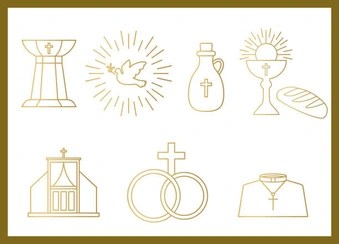
In the Catholic faith, a sacrament is a symbolic rite that facilitates a connection between individuals and God, serving as an outward sign of an inward reality established by Christ. It is designed to channel divine grace. The elements used in sacraments translate physical realities into spiritual truths, effectively bridging the gap between the physical and spiritual worlds. This reflects the belief that human beings are composed of both body and soul. Through engaging with a sacrament, individuals elevate their experiences from the physical realm to the spiritual, fostering a connection to God, who is Spirit. This process not only enhances their earthly existence but also encourages the pursuit of eternal life with God through His grace.
There are seven sacraments in the Catholic Church: Baptism, Confirmation, Penance, the Eucharist, the Anointing of the Sick, Holy Matrimony, and Holy Orders. The seven sacraments “touch all the stages and important moments in the Christian life: they give birth and increase, healing, and mission to the Christian’s life of faith.” Therefore, there is “a certain resemblance between the stages of natural life and the stages of supernatural life” (Catechism of the Catholic Church, 1210). These seven sacraments are categorized into three groups: the sacraments of initiation (Baptism, Confirmation, the Eucharist), the sacraments of healing (Penance or Reconciliation, the Anointing of the Sick), and the sacraments of service (Holy Matrimony, Holy Orders). All seven sacraments are God-given gifts that were given to us out of love.

But you will receive power when the Holy Spirit comes upon you,
Acts 1, 8
In this article, we will examine the Sacrament of Confirmation, which essentially confers the seven gifts of the Holy Spirit: wisdom, knowledge, understanding, counsel, fortitude, piety, and the fear of the Lord (See Isaiah 11:1-2). As with all the sacraments, the recipient of the Sacrament of Confirmation must first be baptized and be at least seven years old. Typically, Catholic children are confirmed between the ages of ten and twelve, having reached a greater level of intellectual and moral maturity. The Sacrament of Baptism or Initiation is completed by the Sacrament of Confirmation since the Christian is “enriched and strengthened” by the Holy Spirit when they are confirmed and “bound more closely to the Church as members of Christ’s mystical body” (CCC, 1285). The seven gifts of the Holy Spirit aid the faithful in fulfilling their baptismal commitments.
Moreover, grace is added to grace, enabling the believer to continue growing in holiness and striving for divine perfection as a partaker of the divine life, in the hope of inheriting eternal life with God. The Samaritans who were baptized received the fullness of the Holy Spirit when the elders laid hands on them (Acts 8:14-17). They received this sacrament, which was instituted by Christ, to further strengthen them in their faith as adults. Catholics believe that Jesus instituted the sacrament of Confirmation when He promised to send the Holy Spirit to empower His disciples to bear witness (Jn 14:16; 15:26; 16:13; Acts 2:1-4). Through the waters of baptism, we become disciples and followers of Christ. Whether we are baptized as infants, adolescents, or adults, we are always in a state of spiritual formation and growth.
Baptism is a call to discipleship. This call to discipleship and obedience is a call to subjugate our lives to the teachings of Christ and the Word of God. Being baptized expresses the desire to be immersed in the word and will of God. Seeking God’s will for us is a natural derivative of baptism, and this involves being willing to enter into a life of service to God and others by performing corporal and spiritual works of mercy. Without the spiritual gifts of the Holy Spirit, we couldn’t possibly live up to our baptismal commitments in the steadfastness of faith and thereby be rewarded with the gift of eternal life (2 Cor 5:1-10; Eph 1:13-14; 4:30).

I believe it is Paul who gives instructions about the “laying on of hands” concerning the Sacrament of Confirmation and having reached the age of maturity (Heb 6: 2). Indeed, he laid hands on the baptized Ephesians to seal them with the Holy Spirit so that they should receive His gifts to be faithful disciples and followers of Christ (Acts 19:5-6). “There are different kinds of gifts. But they are all given to believers by the same Spirit. There are different ways to serve. But they all come from the same Lord. There are different ways the Spirit works. But the same God is working in all these ways and in all people. The Holy Spirit is specially given to each of us. That is for the good of all” (1 Cor 12:4-7).
Paul continues by enumerating what the special gifts of the Holy Spirit are for those who have been confirmed by the laying on of hands. “To some people, the Spirit gives a message of wisdom. To others, the same Spirit gives a message of knowledge. To others, the same Spirit gives faith. To others, that one Spirit gives gifts of healing. To others, he gives the power to do miracles. To others, he gives the ability to prophesy. To others, he gives the ability to distinguish between spirits. To others, he allows them to speak different languages they had not known before. To others, he gives them the ability to explain what was said in those languages. All the gifts are produced by one and the same Spirit. He gives gifts to each person, just as he decides” (1 Cor 12:8-11). Jesus Himself declares that His heavenly Father has set His seal on Him (Jn 6:27). In turn, Jesus sets His seal on the Apostles and all His disciples in the initiatory sacraments of Baptism and Confirmation (Rev 14:1).

The anointing with oil in the rite of Confirmation signifies and imprints a spiritual seal. “Anointing, in Biblical and other ancient symbolism, is rich in meaning: oil is a sign of abundance and joy; it cleanses (anointing before and after a bath) and limbers (the anointing of athletes and wrestlers); oil is a sign of healing since it is soothing to bruises and wounds; and it makes radiant with beauty, health, and strength.” Moreover, “anointing with oil has all these meanings in the sacramental life. The pre-baptismal anointing with the oil of catechumens signifies cleansing and strengthening; the anointing of the sick expresses healing and comfort. The post-baptismal anointing with sacred chrism in Confirmation and ordination is the sign of consecration. By Confirmation, Christians, that is, those who are anointed, share more completely in the mission of Jesus Christ and the fullness of the Holy Spirit with which he is filled so that their lives may give off “the aroma of Christ” (cf. 2 Cor 2:15) (CCC, 1294).
By this anointing with oil, those confirmed receive the “mark” or the “seal” of the Holy Spirit. A seal is a sign or mark of “personal authority.” We who have been baptized and confirmed have the authority to evangelize or give witness to the faith by our words and actions because we bear the seal of the Holy Spirit. The seal of the Holy Spirit also signifies that we are God’s possession and must hold our allegiance to Christ. In other words, we are divine property and servants of our Lord and Master Jesus Christ who must live our lives in keeping with his laws and serve others in love just as our Lord came into this world to serve humanity in love through the corporal and spiritual works of mercy (Mk 10:42-45; Jn 13:14; 15:12; Rom 15:14; Gal 5:13; 6:2; Eph 4:32; 5:21; 1 Thess 5:11; Heb 6:10; Phil 2:7; 1 Jn 4:7; 1 Pet 2:21; 2 Pet 4:10, etc.).
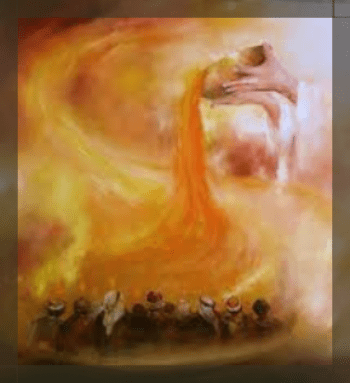
Paul tells us: “It is God who establishes us with you in Christ and has commissioned us; he has also put his seal on us and given us his Spirit in our hearts as a guarantee” (2 Cor 1:21-22). Thus, the seal of the Holy Spirit marks our belonging to Christ and, through him, our Father in heaven. The common priesthood of all believers is joined with the ministerial priesthood of the ordained clergy. Our enrollment in his service is a lifetime with the divine protection of the Holy Spirit (1 Pet 1:5). So, we who have been baptized and confirmed mustn’t “grieve the Holy Spirit” but remain faithful in our life of service to God and neighbor (Eph 4:30).
The celebration of the Sacrament of Confirmation is preceded by the consecration of the sacred chrism, which, in a sense, remains part of the sacrament’s ministration. Chrism is the holy oil through which the sacrament is conferred. In the Roman Catholic rite, a bishop anoints the head of the confirmand with the chrism, including laying on hands. The anointment signifies the full bestowment of grace on the recipient. As the bishop stretches his hand over each confirmand, he invokes the Holy Spirit upon them for His special outpouring of gifts. The sacred chrism symbolizes inner healing and strength, which are essential for genuine followers of Christ.
Thus, the Sacrament of Confirmation is important because it allows the baptized believer to confirm their baptismal promises and enables them to fully live up to their baptismal commitments in charity and the grace of the Holy Spirit. The bishop invokes the outpouring of the Holy Spirit in these words:
“All-powerful God, Father of our Lord Jesus Christ, by water and the Holy Spirit you freed your sons and daughters from sin and gave them new life. Send your Holy Spirit upon them to be their helper and guide. Give them the spirit of wisdom and understanding, the spirit of right judgment and courage, the spirit of knowledge and reverence. Fill them with the spirit of wonder and awe in your presence. We ask this through Christ our Lord.”
The sign of peace that concludes the sacramental rite signifies and demonstrates ecclesial communion with the bishop and with all the faithful.
May the God of hope fill you with all joy and peace as you trust in him,
so that you may overflow with hope by the power of the Holy Spirit.
Romans 15, 13
Hence, the effect of the Sacrament of Confirmation is the special outpouring of the Holy Spirit, which was once granted to the apostles and the disciples in the upper room on Pentecost. Confirmation brings a deepening of grace by rooting us more deeply “in the divine filiation,” uniting us “more firmly in Christ,” increasing “the gifts of the Holy Spirit in us,” rendering our “bond with the Church more perfect,” and giving us “a special strength of the Holy Spirit to spread and defend the faith by word and action as true witnesses of Christ, to confess the name of Christ boldly, and never to be ashamed of the Cross.”
Not unlike Baptism, which it completes, the sacrament is given only once. This is because it also imprints an indelible spiritual mark on the soul (the character), which is “the sign that Jesus Christ has marked a Christian with the seal of his Spirit by clothing him with power from on high so that he may be his witness” (CCC, 1303). A candidate for Confirmation who has attained the age of reason must profess the faith, be in the state of grace, have the intention of receiving the sacrament, and be prepared to assume the role of disciple and witness to Christ, both within the ecclesial community and in temporal affairs.
Early Sacred Tradition
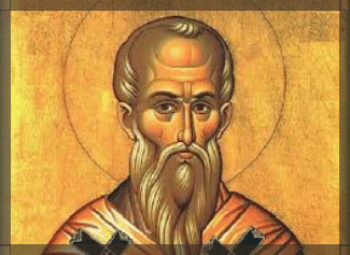
St. Theophilus of Antioch (A.D. 181)
To Autolycus, I:12
“And about your laughing at me and calling me “Christian,” you know not what you are saying.
First, because that which is anointed is sweet and serviceable, and far from contemptible. For
what ship can be serviceable and seaworthy unless it be first caulked [anointed]? Or what castle
or house is beautiful and serviceable when it has not been anointed? Ad what man, when he enters
into this life or into the gymnasium, is not anointed with oil? And what work has either ornament
or beauty unless it be anointed and burnished? Then the air are you unwilling to be anointed with
the oil of God? Wherefore we are called Christians on this account because we are anointed with
the oil of God.”
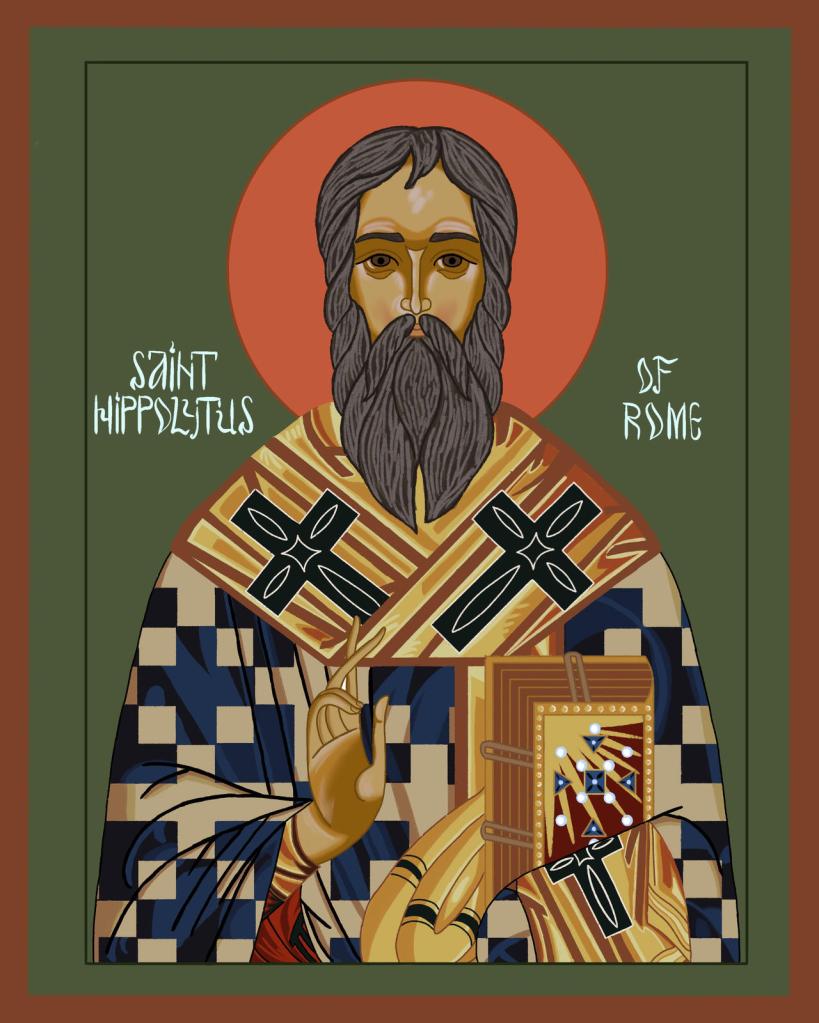
St. Hippolytus (A.D. 204)
Commentary on Daniel, 6;18
“‘And she said to her maids, Bring me oil.’ For faith and love prepare oil and unguents to those who are washed. But what were these unguents, but the commandments of the holy Word? And what was the oil, but the power of the Holy Spirit, with which believers are anointed as with ointment after the layer of washing? All these things were figuratively represented in the blessed Susannah, for our sakes, that we who now believe on God might not regard the things that are done now in the Church as strange but believe them all to have been set forth in figure by the patriarchs of old, as the apostle also says: ‘Now these things happened unto them for ensamples: and they were written for our instruction, on whom the ends of the world are come.’”
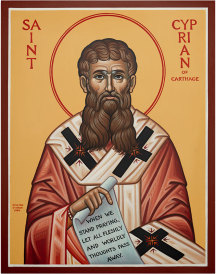
St. Cyprian of Carthage (A.D. 255)
To Januarius, Epistle 70/69:2
“It is also necessary that he should be anointed who is baptized; so that, having received the chrism, that is, the anointing, he may be anointed of God, and have in him the grace of Christ. Further, it is the Eucharist whence the baptized are anointed with the oil sanctified on the altar. But he cannot sanctify the creature of oil, who has neither an altar nor a church; whence also there can be no spiritual anointing among heretics, since it is manifest that the oil cannot be sanctified nor the Eucharist celebrated at all among them. But we ought to know and remember that it is written, ‘Let not the oil of a sinner anoint my head,’ which the Holy Spirit before forewarned in the Psalms, lest anyone going out of the way and wandering from the path of truth should be anointed by heretics and adversaries of Christ.”
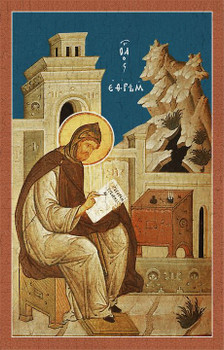
St. Ephraim of Syria (ante A.D. 373)
On Joel 2:24
“‘And your floors shall be filled with wheat, and the presses shall overflow equally with wine and oil.’…
This has been fulfilled mystically by Christ, who gave to the people whom He had redeemed, that is,
to His Church, wheat and wine and oil in a mystic manner…the oil is the sweet unguent with which
those who are baptized are signed, being clothed in the armaments of the Holy Spirit.”

St. Ambrose (A.D. 391)
On the Mysteries, 7:42
“And then remember that you received the seal of the Spirit; the spirit of wisdom and understanding, the spirit of counsel and strength, the spirit of knowledge and godliness, and the spirit of holy fear, and preserved what you received. God the Father sealed you, Christ the Lord strengthened you, and gave the earnest of the Spirit in your heart, as you have learned in the lesson from the Apostle.”
And I will ask the Father, and he will give you another advocate
to help you and be with you forever.
John 14, 16

Pax vobiscum
 Eternally Catholic
Leave a comment