The Sacrament of Baptism

Come now, let us settle the matter,” says the LORD. “Though your sins are like scarlet,
they shall be as white as snow; though they are red as crimson, they shall be like wool.
Isaiah 1, 18
For I will pour water upon him that is thirsty, and floods upon the
dry ground: I will pour my spirit upon thy seed, and my blessing
upon thine offspring.
Isaiah 44, 3
He saved us, not because of deeds done by us in righteousness,
but in virtue of his own mercy, by the washing of regeneration and
renewal in the Holy Spirit, which he poured out upon us richly through
Jesus Christ our Savior.
Titus 3, 5-6
Since ancient times, Catholics have rightly understood that the expression “born again” refers to water baptism. What Catholics mean by being born again is the interior transformation achieved upon baptism in water and the Holy Spirit. It means much more than affirming Jesus Christ as our Lord and Savior who died for our sins and consciously deciding to accept Christ in our hearts and be his disciple. Being born again means much more than believing in who Jesus is and what he has accomplished for those who believe in him. The expression, in fact, is the mental equivalent of “regeneration.”
Regeneration (being “born again”) is the transformation from death to life that occurs in our souls when we first come to God and are justified through the sacrament. He washes us clean of our sins and gives us a new nature, breaking the power of sin over us so that we will no longer be its slaves but its enemies, who must combat it as part of the Christian life and our baptismal commitment (Rom. 6:1–22; Eph. 6:11–17).
Conversion to Christ, the new birth of Baptism, the gift of the Holy Spirit, and the Body and Blood of Christ received as food have made us “holy and without blemish,” just as the Church herself, the Bride of Christ, is “holy and without blemish.” Nevertheless, the new life received in Christian initiation has not abolished the frailty and weakness of human nature, nor the inclination to sin that tradition calls concupiscence, which remains in the baptized such that with the help of the grace of Christ they may prove themselves in the struggle of the Christian life. This is the struggle of conversion directed toward holiness and eternal life to which the Lord never ceases to call us. {Catechism of the Catholic Church, 1426}
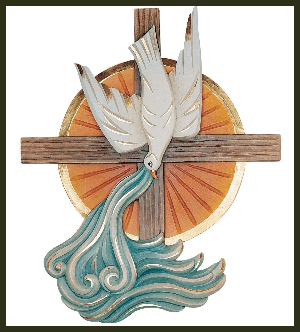
From a Catholic perspective, Isaiah’s prophecy (1:18) reflects the core belief in the transformative power of God’s grace. The imagery of sins being like scarlet and transformed to white as snow symbolizes the profound change that God, in His mercy, can effect in a person’s heart and soul through the infusion of His sanctifying and justifying grace.
The passage from Isaiah 44:3 highlights themes of nourishment, blessing, and spiritual renewal—elements that closely resonate with the sacrament of baptism in the Catholic tradition. In baptism, water symbolizes both physical cleansing and spiritual rebirth. The imagery of God pouring water on the thirsty and floods on the dry ground can be interpreted as representing the grace and life that baptism brings. Just as water is necessary for physical life, the Holy Spirit, poured out in baptism, is essential for spiritual life. This act signifies the washing away of sin and the reception of new life in Christ.
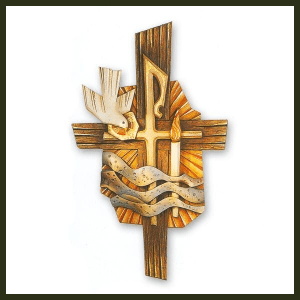
The passage from Titus 3:5-6 emphasizes the fundamental Christian belief that salvation is a gift from God, not something that can be earned through human efforts or righteous deeds. In the context of Catholic theology, this text is closely linked to the sacrament of baptism. The phrase “not because of deeds done by us in righteousness, but in virtue of his own mercy” underscores the Catholic teaching that salvation is a free gift from God, granted through His mercy. Baptism is seen as the means through which this grace is conferred. Catholics believe that, through baptism, individuals are cleansed from original sin and begin their journey of faith, receiving the Holy Spirit.
The phrase “washing of regeneration” directly relates to the waters of baptism. In Catholicism, baptism is understood as a sacrament of initiation that signifies both a spiritual cleansing and a new birth. This aligns with Jesus’ teaching about being “born of water and Spirit” in John 3:5, reflecting the transformative nature of the sacrament. The reference to renewal by the Holy Spirit indicates that baptism is not merely a ritualistic act, but an infusion of spiritual life. Catholics believe that during baptism, the Holy Spirit is poured out upon the baptized, empowering them to live a life in accordance with God’s will. This renewal signifies a deep, personal transformation and incorporation into the Body of Christ.
The mention of “Jesus Christ our Savior” highlights the centrality of Christ in the sacrament of baptism. Catholics believe that baptism is an intimate participation in Christ’s death and resurrection. This sacrament is seen as a pathway to salvation because it initiates a believer’s relationship with Christ and the Church. Overall, Titus 3:5-6 beautifully encapsulates the essence of Catholic baptism, portraying it as a sacrament of grace, renewal, and transformation, deeply rooted in God’s mercy and love through Jesus Christ. This understanding encourages Catholics to appreciate baptism not just as a rite of passage, but as a vital and life-giving sacrament that marks the beginning of a lifelong journey of faith.

Jesus answered and said unto him, Verily, verily, I say unto thee,
Except a man be born again, he cannot see the kingdom of God…
Truly, truly, I say to you, Except a man be born of water and
of the Spirit, he cannot enter into the kingdom of God.
John 3, 3- 5
In the conversation that Jesus is having with Nicodemus, our Lord says to him, “Most assuredly, I say to you, unless one is born again, he cannot see the kingdom of God” (Jn 3:3). The Greek phrase often translated as “born again” (γεννηθῇ ἄνωθεν or gennatha anothen in the English transliteration) also occurs in V.7 in which Jesus says, “Do not marvel that I said to you, “You must be born again.” The Greek word anothen sometimes can be translated “again,” but in the New Testament, it most often means “from above” or “from heaven.” In the King James Version, which I am using, the only two times it is translated “again” are in John 3:3 and 3:7. Every other time it is given a different rendering. However, we have our mental equivalent in Vv.5-6, in which Jesus says, “Most assuredly, I say to you, unless one is born of water and the Spirit, he cannot enter the kingdom of God. That which is born of the flesh is flesh, and that which is born of the Spirit is spirit.”
Now, in V.3, our Lord declares that one must be “born again” to enter the kingdom of God, while in V.5, he reiterates more clearly that one must be “born of water and spirit” to enter the kingdom of God. Thus, the expression “born again” refers to the Sacrament of Baptism in water and Spirit, which is salvific. One who is born or reborn “of Spirit” is born “from above” or “from heaven.” Jesus does say on another occasion, “He who believes and is baptized will be saved” (Mk 16:16). One cannot enter the kingdom of heaven unless they are saved, and this requires not only belief in Jesus but also the sacrament of initiation that washes away the stain of original sin and marks a new life in the Spirit.

As we have noted, St. Paul describes the Sacrament of Baptism as a “washing of regeneration” that is “poured out on us” regarding water baptism. The original Greek verb for “washing” is loutron (λουτρόν), which generally refers to a ritual washing of purification (Titus 3:5-6). Paul also wrote, “Do you not know that all of us who have been baptized into Christ Jesus were baptized into his death? We were buried therefore with him by baptism into death so that as Christ was raised from the dead by the glory of the Father, we too might walk in newness of life” (Rom 6:3–4). Baptism unites us with Christ’s death and resurrection so that we might die to sin and receive new life.
In Colossians 2:11–13, the apostle tells us, “In [Christ] you were also circumcised, in the putting off of the sinful nature, not with a circumcision done by the hands of men but with the circumcision [of] Christ, having been buried with him in baptism and raised with him through your faith in the power of God.” These NT passages evoke the words Jesus spoke to Nicodemus: “That which is born of the flesh is flesh, that which is born of the Spirit is spirit.” Being born again is a movement from being a child of Adam to a child of God.
Soon after Paul had converted, he was told, “And now why do you wait? Rise and be baptized, and wash away your sins, calling on his name” (Acts 22:16). The “washing away” refers to water baptism. As a matter of fact, Ananias’ phrase “wash away” comes from the Greek word apolouo (ἀπολούω) Apolouo means an actual cleansing that removes sin. It is not a symbolic covering up of sin. Paul’s faith in Jesus wasn’t enough to save him. He also had to be baptized to have his sins forgiven or “blotted out” and to receive the Holy Spirit who justifies us in our collaboration with Him. So, baptism is necessary for our salvation and isn’t merely a symbolic ritual that serves as a testimony of faith. In fact, Paul says we are “washed, sanctified, and justified” in the name of the Lord Jesus, referencing water baptism. The “washing” of baptism gives birth to sanctification and justification, which proves baptism is not just symbolic (1 Cor 6:11).
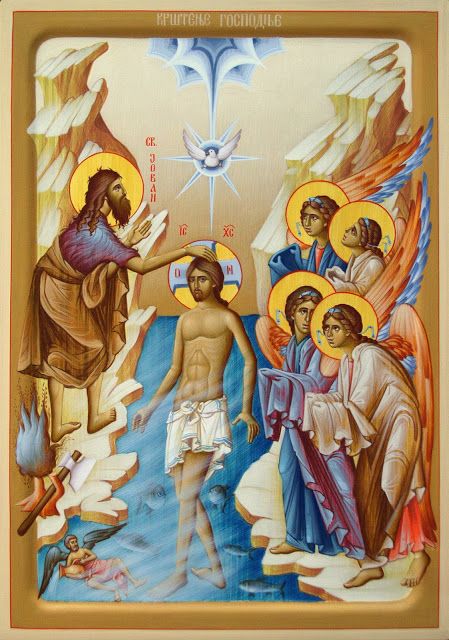
In Acts 2:38, Peter tells us, “Repent and be baptized every one of you in the name of Jesus Christ for the forgiveness of your sins, and you shall receive the gift of the Holy Spirit” (Acts 2:38). We must not only repent but also be baptized for the forgiveness of sin so that we receive the graces and gifts of the Holy Spirit for a new life with God. Simply believing in Jesus and accepting him as our personal Lord and Savior won’t regenerate us. We are saved by grace through faith (Eph 2:8). Jesus suffered and died to expiate sin, but he also merited for us the dispensation of divine grace. We aren’t saved by faith alone.
Many passages in the Old Testament foreshadow the regenerative power of baptism by water and the Holy Spirit. For instance, Naaman took seven dips in the Jordan and, as a result, his flesh was restored like a child’s (2 Kings 5:14). Being born again is a restorative experience of the heart and mind of the human soul through the power of the Holy Spirit. Isaiah prophesies that the time is coming when the Lord pours out His water and His Spirit, which refers to the institution of the Sacrament of Baptism by Christ our Lord. Water and Spirit are always joined in the Scriptures. We are cleansed and regenerated by the Holy Spirit, who moves through the water.

A new heart I will give you, and a new spirit I will put within you; and I will take out of your flesh the heart of stone and give you a heart of flesh. And I will put my spirit within you, and cause you to walk in my statutes and be careful to observe my ordinances. You shall dwell in the land which I gave to your fathers; and you shall be my people, and I will be your God. And I will deliver you from all your uncleanliness; and I will summon the grain and make it abundant and lay no famine upon you.
Ezekiel 36, 26-29
The passage from Ezekiel speaks to the transformative power of God’s Spirit and the renewal of His covenant with His people. In the context of Catholic baptism, this scripture highlights several key themes that resonate deeply with the sacrament’s significance.
The verse begins with the promise that God will put His Spirit within His people. In Catholic theology, baptism is seen as the moment when individuals receive the Holy Spirit. This initiation into the Christian community signifies a spiritual rebirth, akin to the transformation described in Ezekiel. Moreover, the text emphasizes that those who receive God’s Spirit will be empowered to follow His commandments. In baptism, Catholics believe they are cleansed from sin and strengthened to live according to Christ’s teachings. This aligns with the call to lead a life of holiness and adherence to God’s will, as expressed in Ezekiel.
The promise of deliverance from uncleanness in Ezekiel illustrates the cleansing aspect of baptism. In Catholic belief, baptism removes original sin and any personal sins for those being baptized, cleansing them to live a life free from the bondage of sin. Furthermore, the reference to abundant grain symbolizes spiritual nourishment received through the sacraments, particularly the Eucharist, which follows Baptism in the journey of faith.
The assurance of being God’s people and Him being their God reflects the covenant relationship central to both the Old and New Testaments. Baptism in the Catholic Church marks the beginning of this relationship, where the baptized become part of the Church, the Body of Christ, entering into a new covenant through Jesus’ sacrifice. The mention of dwelling in the land given to the fathers can be seen as a metaphor for the eternal life and heavenly kingdom that baptism opens up for believers. It reflects the hope of salvation and the promise of a shared inheritance in God’s kingdom for the baptized.
Early Sacred Tradition
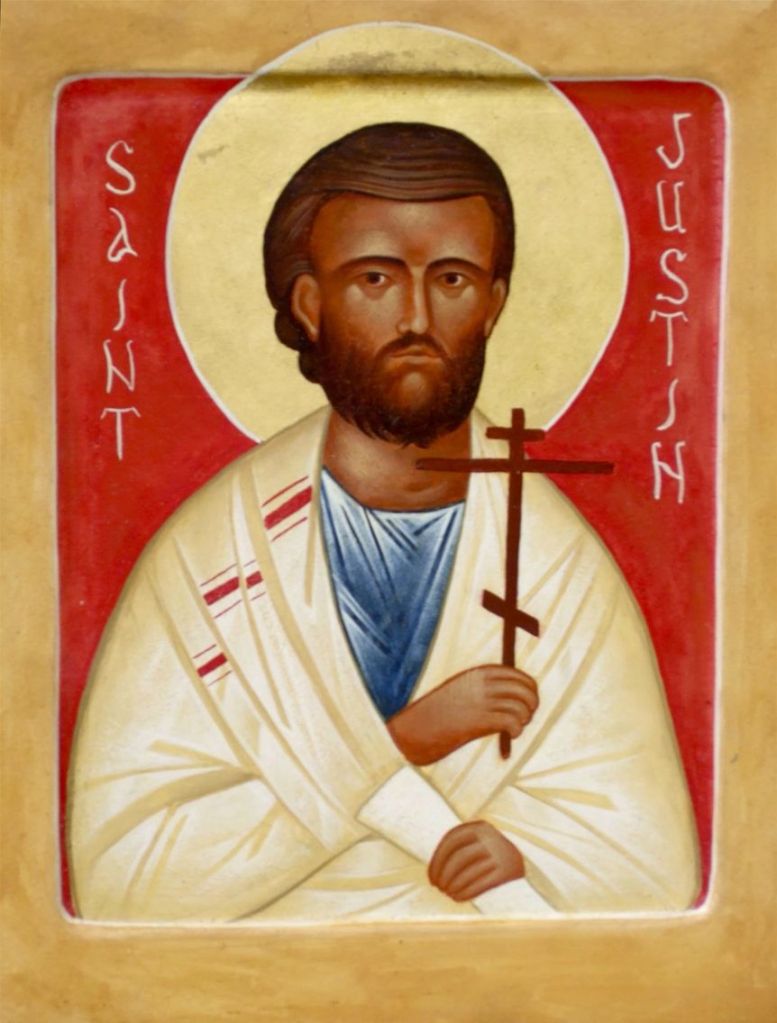
St. Justin Martyr, First Apology, 61
(A.D. 155)
“For Christ also said, ‘Except ye be born again, ye shall not enter into the kingdom of
heaven.’ Now, that it is impossible for those who have once been born to enter into
their mothers’ wombs, is manifest to all. And how those who have sinned and repent
shall escape their sins, is declared by Esaias the prophet, as I wrote above; he thus
speaks: ‘Wash you, make you clean; put away the evil of your doings from your
souls; learn to do well…And though your sins be as scarlet, I will make them white
like wool; and though they be as crimson, I will make them white as snow…And for
this [rite] we have learned from the apostles this reason. Since at our birth we were
born without our own knowledge or choice, by our parents coming together, and
were brought up in bad habits and wicked training; in order that we may not remain
the children of necessity and of ignorance, but may become the children of choice
and knowledge, and may obtain in the water the remission of sins formerly
committed, there is pronounced over him who chooses to be born again, and has
repented of his sins, the name of God the Father and Lord of the universe; he who
leads to the layer the person that is to be washed calling him by this name alone
And this washing is called illumination because those who learn these things are
illuminated in their understandings. And in the name of Jesus Christ, who was
crucified under Pontius Pilate, and in the name of the Holy Ghost, who through the
prophets foretold all things about Jesus, he who is illuminated is washed.”

St. Irenaeus, Fragment, 34
(A.D. 190)
” ‘And dipped himself,’ says [the Scripture], ‘seven times in Jordan.’ It was not for
nothing that Naaman of old, when suffering from leprosy, was purified upon his
being baptized, but it served as an indication to us. For as we are lepers in sin, we are
made clean, by means of the sacred water and the invocation of the Lord, from our
old transgressions; being spiritually regenerated as new-born babes, even as the
Lord has declared: ‘Except a man be born again through water and the Spirit, he
shall not enter into the kingdom of heaven.’”

St. Hippolytus, Discourse on the Holy Theophany, 8
(A.D. 217)
“But give me now your best attention, I pray you, for I wish to go back to the
fountain of life, and to view the fountain that gushes with healing. The Father of
immortality sent the immortal Son and Word into the world, who came to man in
order to wash him with water and the Spirit; and He, begetting us again to
incorruption of soul and body, breathed into us the breath (spirit) of life, and
endued us with an incorruptible panoply. If, therefore, man has become immortal,
he will also be God. And if he is made God by water and the Holy Spirit after the
regeneration of the layer he is found to be also joint-heir with Christ after the
resurrection from the dead. Wherefore I preach to this effect: Come, all ye kindreds
of the nations, to the immortality of the baptism.”

St. Cyprian of Carthage, To Stephen, 71:72
(A.D. 253)
“[W]hen they come to us and to the Church which is one, ought to be baptized, for
the reason that it is a small matter to ‘lay hands on them that they may receive the
Holy Ghost,’ unless they receive also the baptism of the Church. For then finally, can
they be fully sanctified, and be the sons of God, if they be born of each sacrament;
since it is written, ‘Except a man be born again of water, and of the Spirit, he cannot
enter into the kingdom of God.’…[O]nly baptism of the Holy Church, by divine
regeneration, for the kingdom of God, may be born of both sacraments, because it is
written, ‘Except a man be born of water and of the Spirit, he cannot enter into the
kingdom of God.’”
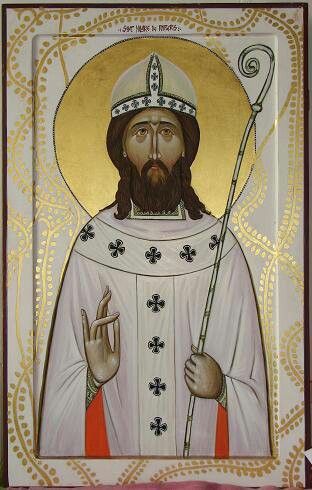
St. Hilary of Poitiers, Trinity, 9:9
(A.D. 359)
“We are circumcised not with a fleshly circumcision but with the circumcision of
Christ, that is, we are born again into a new man; for, being buried with Him in His
baptism, we must die to the old man, because the regeneration of baptism has the
force of resurrection.”

St. Athanasius, Discourse Against the Arians, III:33
(A.D. 360)
“And with reason; for as we are all from earth and die in Adam, so being regenerated
from above of water and Spirit, in the Christ we are all quickened.”

St. Gregory of Nyssa, Against Eunomius, 2:8
(A.D. 382)
“The birth by water and the Spirit, Himself led the way in this birth, drawing
down upon the water, by His own baptism, the Holy Spirit; so that in all things He
became the first-born of those who are spiritually born again, and gave the name of
brethren to those who partook in a birth like to His own by water and the Spirit.”
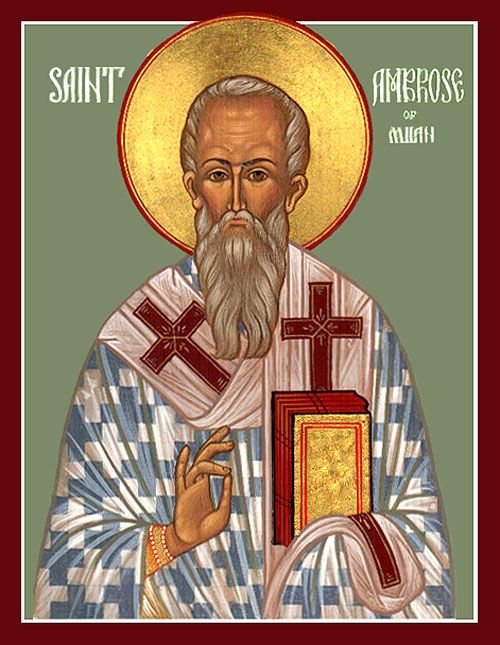
St. Ambrose, On the Mysteries, 4:20
(A.D. 391)
“Therefore, read that the three witnesses in baptism, the water, the blood, and the
Spirit, are one, for if you take away one of these, the Sacrament of Baptism does not
exist. For what is water without the cross of Christ? A common element, without
any sacramental effect. Nor, again, is there the Sacrament of Regeneration without
water: ‘For except a man be born again of water and of the Spirit, he cannot enter
into the kingdom of God.’”
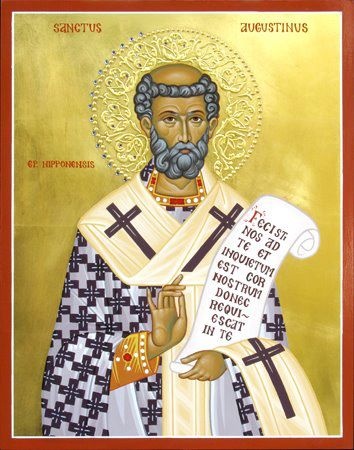
St. Augustine, To Boniface, Epistle 98:2
(A.D. 408)
“It is this one Spirit who makes it possible for an infant to be regenerated through
the agency of another’s will when that infant is brought to Baptism; and it is through
this one Spirit that the infant so presented is reborn…’Unless a man be born again of
water and the Holy Spirit.’ The water, therefore, manifesting exteriorly the
sacrament of grace, and the Spirit effecting interiorly the benefit of grace, both
regenerate in one Christ that man who was in one Adam.”

Truly, truly, I say to you, Except a man be born of water
and of the Spirit, he cannot enter into the kingdom of God.
John 3, 5
PAX VOBISCUM
 Eternally Catholic
Leave a comment