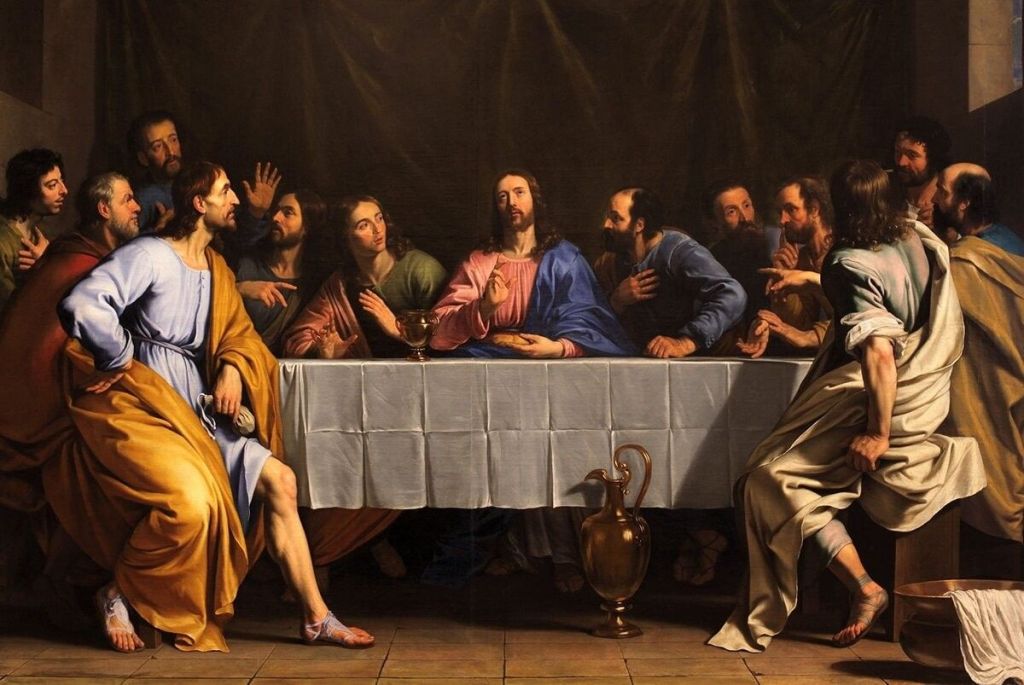
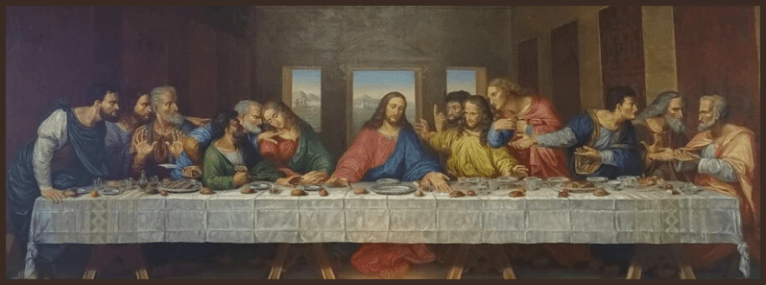
The Last Supper
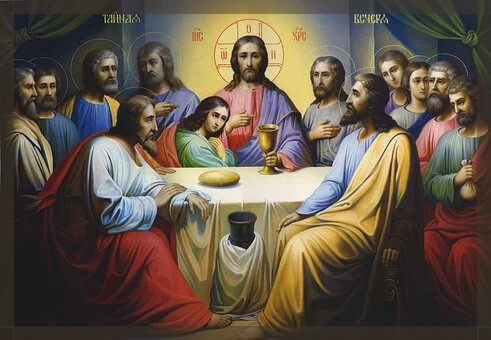
While they were eating, Jesus took a loaf of bread, and after blessing it he broke it, gave it to the disciples, and said, “Take, eat; this is my body.” Then he took a cup, and after giving thanks he gave it to them, saying, “Drink from it, all of you; for this is my blood of the covenant, which is poured out for many for the forgiveness of sins. I tell you, I will never again drink of this fruit of the vine until that day when I drink it new with you in my Father’s kingdom.
Matthew 26, 26-29
The cup of blessing that we bless, is it not a sharing in the blood of Christ?
The bread that we break, is it not a sharing in the body of Christ?
1 Corinthians 10, 16
The event of Christ offering Himself as the Passover lamb during the Last Supper marks the foundation of the Eucharist celebration for New Covenant believers. On that transformative night, coinciding with the timing of the Jewish Passover, Jesus redefined the traditional Passover meal, which typically included a sacrificial lamb, to convey a deeper spiritual significance. To grasp the magnitude of this shift, we must examine the structure of the Last Supper itself, which occurs within the context of the Passover Seder. During this ritual meal, Jesus presides over a gathering with His apostles, who are required to partake of four cups of wine as part of the Seder, each cup representing a different aspect of redemption.
Matthew’s Gospel begins its account during the serving of the third cup, known as the Berekah or the “Cup of Salvation.” This choice is significant, as Jesus, aware of His impending sacrifice, connects this moment to His role as the Passover lamb. In Matthew 26:29 and Mark 14:25, He speaks of not drinking again from the fruit of the vine until He drinks it anew in His Father’s kingdom, emphasizing the eternal nature of the redemption He is about to accomplish.
In addition, the Apostle Paul refers to this third cup as the “Cup of Blessing” in 1 Corinthians 10:16, thereby drawing a direct link between the Seder meal and the sacrament of the Eucharist. This connection illustrates that the consumption of the third cup makes present the Paschal sacrifice of Christ, the Lamb who was slain for our sins, as prophesied in Isaiah 53:7 and heralded by John the Baptist in John 1:29, where he declares Jesus to be the “Lamb of God.” This profound moment reiterates the continuity between the Jewish Passover and the Christian understanding of salvation through Christ’s sacrifice, highlighting the significance of the Eucharist as a celebration of that redemptive act.
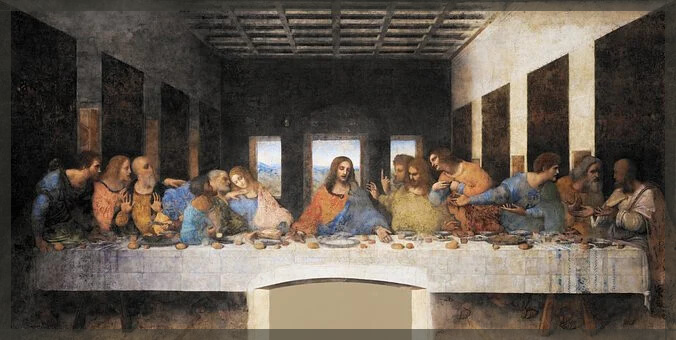
In the Passover Seder meal, Jesus notably omits the fourth cup, known as the Hallel or “Cup of Consummation.” This omission is deeply significant, as it connects the Eucharistic sacrifice represented in the Seder to Christ’s ultimate sacrifice on the cross. Both events—the Last Supper and the crucifixion—are intertwined, illustrating a singular act of salvation. The Last Supper serves not only as a ritual meal but also as a prophetic foreshadowing of Jesus’ sacrificial death on the cross.
As part of the Jewish tradition, the fourth cup symbolizes the completion of the Passover and the fulfillment of God’s promises. Therefore, this cup remains unconsumed during the Last Supper, indicating that the sacrifice is not yet complete at that moment. It is not until Jesus is on the cross, where He declares, “It is consummated” (John 19:29, 30), that He finally consumes the fourth cup through the sour wine offered to Him, signifying the completion of His redemptive work. This profound connection emphasizes that the Last Supper and the crucifixion are not separate events but rather two parts of the same divine plan for humanity’s salvation.
On the cross, Jesus was offered sour wine on a hyssop branch, a detail that resonates deeply with biblical traditions. In Exodus 12:22, hyssop was employed by the Israelites to sprinkle the lamb’s blood on their doorposts, ensuring divine protection against the plague. This act represents the sacrificial lambs whose blood was shed, a poignant precursor to the ultimate sacrifice made by Christ. Furthermore, hyssop was also used by the priests in the Old Covenant during sacrificial offerings, signifying purification and atonement. This connection deepens our understanding of Christ’s sacrifice; it links him to the lambs that were slaughtered and consumed during the Seder meal, a central ritual in Jewish Passover commemorating the Exodus from Egypt.
During the Seder, the Cup of Consummation marked the climax of the meal, where wine is consumed as a symbol of joy and fulfillment of the covenant. Thus, the narrative of Christ’s sacrifice intertwines with these deeply rooted traditions, illustrating that his offering of himself began in the upper room, where he instituted the Eucharist, and was consummated on Mount Golgotha, where he willingly laid down his life, transcending the old covenant with the establishment of a new and everlasting covenant through his blood.
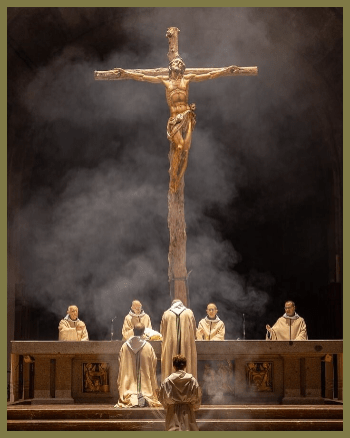
The Holy Sacrifice of the Mass in the Catholic Church serves as a profound and timeless re-presentation of Christ’s singular sacrifice on Calvary. This sacred liturgy, often referred to as the Lord’s Supper or Seder meal of the New Covenant, allows the faithful to experience the reality of Christ’s crucifixion and resurrection as perpetually present. It serves as a visible sign of the eschatological marriage feast in heaven, as depicted in Revelation 19:9, which describes the blessed union between Christ and His Church.
St. Paul underscores the importance of celebrating this Eucharistic feast in his first letter to the Corinthians, stating, “Therefore, let us celebrate the festival, not with the old yeast, the yeast of malice and evil, but with the unleavened bread of sincerity and truth” (1 Cor 5:8). This passage highlights not only the call to participate in the Eucharist but also emphasizes the need for inner purity and sincerity when approaching this sacred rite.
In essence, partaking in the Eucharist means worthily consuming the flesh of the Lamb of God and drinking His blood in the Blessed Sacrament. This sacramental participation is integral to achieving holy communion with God and fully reaping the spiritual fruits of Our Lord’s ultimate sacrifice, as elaborated in 1 Corinthians 11:17-22. Here, Paul cautions the faithful to approach the Eucharist with reverence and discernment, ensuring that they are aligned with the truth and grace of God’s covenant. In doing so, believers not only acknowledge the sacrifice of Christ but also embrace the transformative power it holds for their lives.
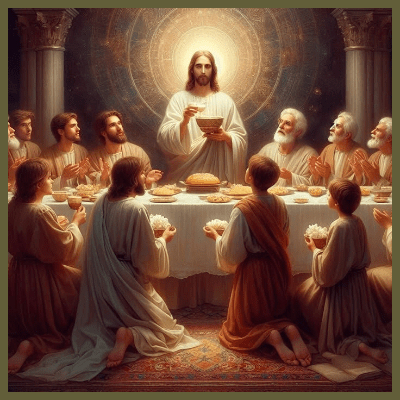
Hence, the Lord’s Supper isn’t just a symbolic memorial meal, as most Protestants contend, but a marriage feast that marks God’s establishment of the New Covenant in which the Eucharist makes Christ’s one eternal sacrifice present. Scripture confirms this truth in the words of consecration – “Do this in remembrance of me” – used by Jesus in the Last Supper: touto poieite tan eman anamnasin (Lk 22:19; cf. 1 Cor 11:24-25). Our Lord says, “Offer this as a memorial sacrifice.” The Greek verb poiein (ποιεῖν) or “do” is used in the context of offering a sacrifice where, for instance, in the Septuagint, God uses the same word poieseis (ποιέω) regarding the sacrifice of the lambs on the altar (Ex 29:38-39). The noun anamnesis (ἀνάμνησις) or “remembrance” also refers to a sacrifice that is really or actually made present in real-time by the power of God in the Holy Spirit, as it reminds us of the actual event (Heb 10:3; Num 10:10). [4]
The Holy Sacrifice of the Mass transcends being merely a memorial of a historical event; it represents a profound mystery where a past event is made present in the current moment. In this context, Christ’s Eucharistic sacrifice serves as a living memorial, a constant reminder of the redemptive work that our Lord has accomplished for humanity and continues to actualize through his singular and timeless sacrifice. This understanding emphasizes that the Eucharist is not merely a recollection of a completed event, but a dynamic participation in the ongoing reality of Christ’s sacrifice.
While the crucifixion itself remains a definitive moment in history, the significance of Christ’s single sacrifice extends beyond that point in time into the present. Each celebration of the Mass reopens that moment, allowing the faithful to experience the grace and mercy of that act of love anew. Through the Sacrament of the Holy Eucharist, believers participate in this eternal reality, where Christ’s self-offering on the cross is uniquely and continuously made present, inviting all to draw deeper into the mystery of salvation.
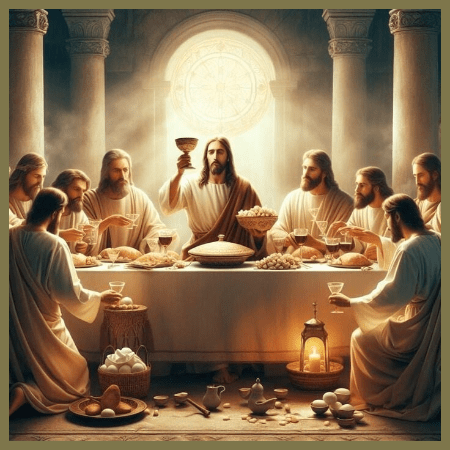
We read in Leviticus 24:7: ‘By each stack put some pure incense as a memorial portion to represent the bread and to be a food offering presented to the LORD.’ The word “memorial” in Hebrew in the sacrificial sense is the feminine noun azkarah ( אַזְכָּרָה ), which means “to actually make present.” There are many instances in the Old Testament where azkarah refers to sacrifices that are currently being offered, and thus are present in time (Lev 2:2, 9, 6:5; 16:5-12; Num 5:26; 10:10). [5] These are the same sacrifices that are being offered in memory at this time. Jesus’ command for us to offer the bread and wine (transubstantiated into his body and blood) as a memorial offering shows that the sacrificial offering of his body and blood is made present in time over and over again while serving as a reminder of what he has accomplished for us through his one, single sacrifice of himself. Thus, the Holy Sacrifice of the Mass is sacramentally a re-presentation of Christ’s sacrifice on the cross, which began at the Last Supper and historically occurred on Calvary.
Sadly, Protestants argue in disbelief that Jesus is speaking metaphorically about eating his flesh and that the bread only symbolizes his body. However, the Greek verbs used in John 6 (The Bread of Life Discourse) render their interpretation implausible. Throughout John 6:23-53, the Greek text uses the verb phago (φάγω) nine times. This verb means to literally “eat” or physically “consume.” Jesus repeated himself this often because of the Jews’ disbelief. In a sense, he was challenging their faith in him while driving an important point home. In fact, many of his disciples deserted him since they knew he was speaking literally and thought he was mad. For this reason, Jesus uses an even more literal verb describing the food consumption process (Jn 6: 54, 55, 56, 57). This is the verb trogo (τρώγω), which means to “gnaw,” “chew,” or “crunch.” Though phago may be used in a metaphorical sense, trogo is never applied symbolically. [6]

Anyway, for further clarification, Jesus says, “For my flesh is food indeed, and my blood is drink indeed” (Jn 6:55). Jesus is responding to those who refused to believe in what he was saying. Additionally, when Jesus institutes the Eucharistic sacrament at the Last Supper, He says, “This is my body and blood” (Mt 26:26; Mk 14:22; Lk 22:19-20). The Greek phrase is “Touto estin to soma mou.” So, what our Lord means to say is, “This is really or actually my body and blood.” St. Paul uses the same phraseology in his First Letter to the Corinthians 11:24. Paul does reaffirm that “the cup of blessing” and “the bread of which [the Corinthians] partake” is “actual” participation in Christ’s body and blood” (1 Cor 10:16). The Greek noun koinonia (κοινωνία) denotes a “participation” that isn’t merely symbolic. [7]
Moreover, the Greek text in John’s Gospel uses sarx (σάρξ), which literally means “flesh.” The phrases “real food” and “real drink” contain the adjective alethes (ἀληθής), which means “really” or “truly” (Jn 6:55). This adjective is used on occasion when there is doubt concerning the reality of something, in this case, which is Jesus’ flesh really being food to eat and his blood really being something to drink for everlasting life. [8] Jesus is assuring his doubters that what he is literally saying is, in fact, true. The Apostles refused to desert Jesus after listening to their Master’s discourse. They attended the Seder meal with him, on which occasion, they consumed the flesh of the sacrificed Lamb of God and drank his blood just as the Jewish people ate the flesh of the sacrificed lamb and were sprinkled with its blood for the forgiveness of sin (Ex 12:5-8; 24:8).
Early Sacred Tradition
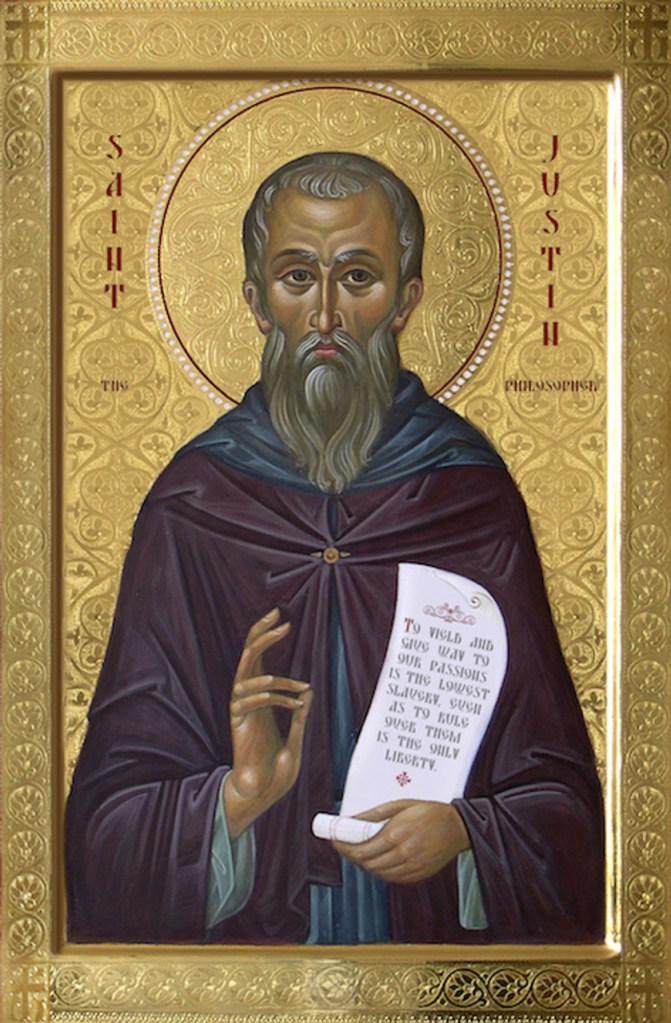
Justin Martyr, First Apology, 66
(A.D. 155 )
“For not as common bread and common drink do we receive these; but in like
manner as Jesus Christ our Saviour, having been made flesh and blood for our
salvation, so likewise have we been taught that the food which is blessed by the
prayer of His word, and from which our blood and flesh by transmutation are
nourished, is the flesh and blood of that Jesus who was made flesh.”
Irenaeus, Against Heresies, V:2,2
(c. A.D. 190)
“He acknowledged the cup (which is a part of the creation) as his own blood,
from which he bedews our blood; and the bread (also a part of creation) he
affirmed to be his own body, from which he gives increase to our bodies.”

Basil, To Patrician Caesaria, Epistle 93
(A.D. 372)
“It is good and beneficial to communicate every day, and to partake of the holy
body and blood of Christ. For He distinctly says, ‘He that eateth my flesh and
drinketh my blood hath eternal life.’ And who doubts that to share frequently in
life, is the same thing as having manifold life. I, indeed, communicate four times a
week, on the Lord’s day, on Wednesday, on Friday, and on the Sabbath, and on the
other days if there is a commemoration of any Saint.”
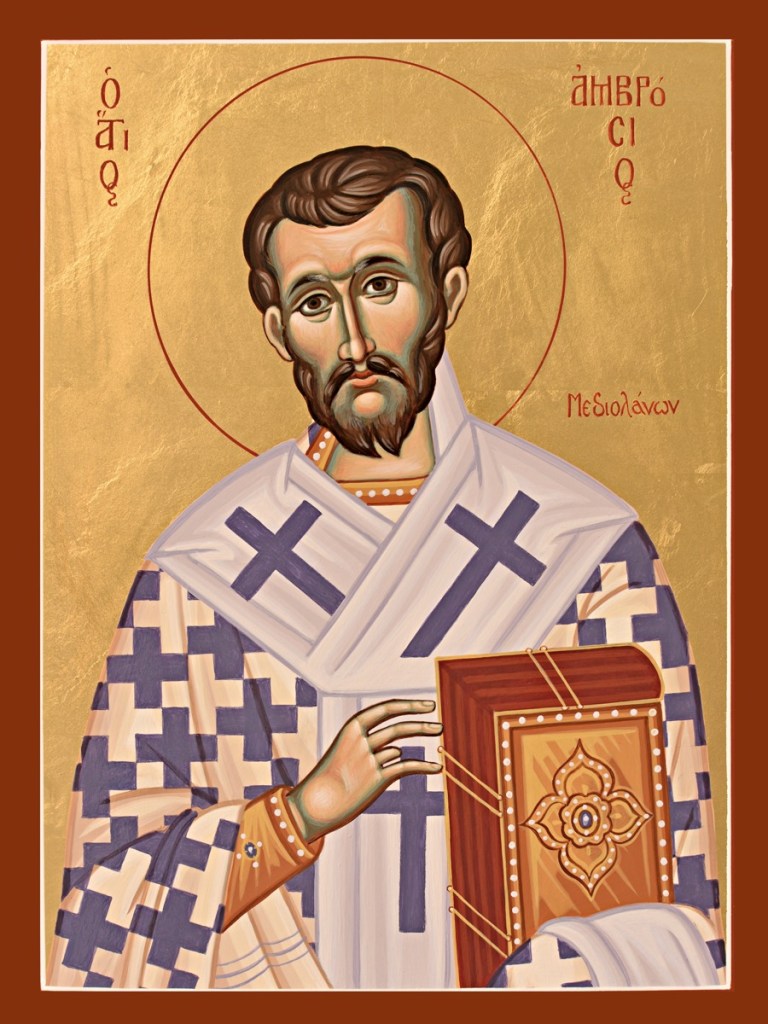
Ambrose, On the Mysteries, 9:50
(A.D. 390-391)
“Perhaps you will say, ‘I see something else, how is it that you assert that I receive
the Body of Christ?’ And this is the point which remains for us to prove. And what
evidence shall we make use of? Let us prove that this is not what nature made, but
what the blessing consecrated, and the power of blessing is greater than that of
nature, because by blessing nature itself is changed…The Lord Jesus Himself
proclaims: ‘This is My Body.’ Before the blessing of the heavenly words another
nature is spoken of, after the consecration the Body is signified. He Himself speaks
of His Blood. Before the consecration it has another name, after it is called Blood.
And you say, Amen, that is, It is true. Let the heart within confess what the mouth
utters, let the soul feel what the voice speaks.
“I am the bread of life; whoever comes to me shall not hunger,
and whoever believes in me shall never thirst.”
John 6, 35
Notes & Sources
[1-3] Brant Pitre, Jesus and the Jewish Roots of the Eucharist (New York: Doubleday, 2011)
[4-8] John Salza, The Biblical Basis for the Eucharist (Huntington, Ill: Our Sunday Visitor, 2008)
Pax vobiscum
 Eternally Catholic
Leave a comment