The Sacrament of Baptism

Come now, let us settle the matter,” says the LORD.
“Though your sins are like scarlet, they shall be as white as snow;
though they are red as crimson, they shall be like wool.
Isaiah 1, 18
For I will pour water on the thirsty land,
and streams on the dry ground;
I will pour out my Spirit on your offspring,
and my blessing on your descendants.
Isaiah 44, 3
I will sprinkle clean water on you, and you will be clean; I will cleanse
you from all your impurities and from all your idols. I will give you a new
heart and put a new spirit in you; I will remove from you your heart of stone
and give you a heart of flesh. And I will put my Spirit in you and move you
to follow my decrees and be careful to keep my laws.
Ezekiel 36, 25-27
And that is what some of you were. But you were washed,
you were sanctified, you were justified in the name of the LORD
Jesus Christ and by the Spirit of our God.
2 Corinthians 6, 11
In Catholic theology, original sin is regarded as the general state of sinfulness, characterized by the absence of sanctity and perfect charity, into which all human beings are born. We read in the Catechism of the Catholic Church that original sin is the natural state of “deprivation of the original holiness and justice,” which we inherit as descendants of Adam and Eve. It is a sin contracted by all human beings by natural propagation, not a sin they committed. Because original sin is a state or condition of our human nature and not a sinful act on our part, it “does not take on the character of a personal fault in any of Adam’s descendants” (Catechism of the Catholic Church, 405).
All Adam’s descendants are conceived and born in the state of original sin (Ps 51:7). St. Paul tells us: “As sin came into the world through one man and death through sin, and so death spread to all men since all men sinned” (Rom 5:12). The apostle adds: “Then as one man’s trespass led to condemnation for all men, so one man’s act of righteousness leads to acquittal and life for all men” (Rom 5:18). Physical death is a sign of spiritual death. Though physical death remains a temporal penalty for our common sins against God, Christ restored humanity to spiritual life with God through his passion and death on the Cross. The second death – eternal damnation or separation from God – is no longer an irrevocable prospect for all human beings.

Original sin refers to the condition of being deprived of supernatural grace, stemming from Adam’s fall from his initial state of communion with God. When Adam fell, he entered a flawed state, losing the supernatural life he was intended to have according to God’s design. This loss resulted in what we now identify as original sin—a deprivation of the inherent sanctity and justice that God bestowed upon Adam at creation. Because of this Fall, all of Adam’s biological descendants have inherited a predisposition toward sin, manifested through tendencies such as the concupiscence of the eyes, the concupiscence of the flesh, and the pride of life.
Human beings tend to strive for a god-like status, often seeking independence from God and acting out of alignment with His will. This inclination can lead to actions considered mortal sins, which can strip the soul of its sanctity and justice in the eyes of God, a consequence stemming from the original fall from grace. Original sin is understood in an analogical sense; it is described as a sin that is “contracted” rather than “committed,” indicating a condition rather than a specific act. Individual personal sins are distinguished from original sin, as they carry the weight of personal fault and guilt, arising from the inherent tendency to sin as part of fallen humanity.

The redemption of humankind signifies a crucial act of divine intervention where God restored sanctifying or justifying grace to all humanity through the merits of Christ. This act of mercy is foundational because, without it, humanity would have been incapable of regaining the supernatural state above nature for which God created us. Through the grace of redemption, the sin of Adam is blotted out; however, it is essential to note that the moral and physical consequences of original sin persist even after baptism. Dom Bruno Webb provides an analogy for understanding original sin by likening it to a disease that has infected the original cell of the human body. He suggests that this “disease” can permeate every organ and cell as humanity continues to evolve from that first cell. Consequently, original sin is described as a “poison” affecting everyone. Thus, the sin of Adam is a shared condition among all human beings, representing what can be termed “our common heritage.”
In Romans 5:19, the Apostle Paul states, “many (polloi) were made sinners.” This choice of wording does not indicate a contradiction; instead, it highlights a key theological point. While all people are subjected to original sin, not everyone actively rejects God. The term “all” (pantes) is not used here because Paul does not imply that everyone who has ever lived has sinned similarly. It is important to note that infants and individuals with cognitive disabilities are not considered to have committed sin in a conscious and morally responsible way. Mortal or “deadly” sin requires full knowledge of wrongdoing and consent from the individual. However, it’s recognized that, in specific circumstances, even those individuals may fall short of God’s glory due to their human nature, as they are part of the broader collective of humanity. This understanding emphasizes the nuances of sin and human responsibility in theological discussions.
Infants and young children, who are below the age of moral reasoning, are subject to suffering and death. Despite their vulnerability, it is important to note that they have not committed any grave personal sins during their brief lives. Yet, all humans inherit Adam’s sin through association. Consequently, the Sacrament of Baptism is considered necessary for everyone, including those infants and young children who have not yet reached the age of moral reasoning. This sacrament involves baptismal water, which is believed to cleanse the soul of original sin through the operation of the Holy Spirit, returning it to a state of holiness and justice, even though some physical and moral consequences of that original sin may persist.
According to the biblical account, Adam and Eve experienced spiritual death after eating from the forbidden tree of knowledge, which was against God’s command (Gen 2:17). This act of disobedience resulted in a spiritual deprivation that is believed to be passed down to all their biological descendants, except for the Blessed Virgin Mary, who is noted to be conceived without original sin by the foreseen merits of Christ because of her election to the Divine Motherhood (Gen 3:15; Lk 1:28, 42, etc.). As a consequence of original sin, humanity is predisposed to sin and often succumbs to sinful behaviors due to their corrupting influence. The Old Testament reflects this understanding, as Job 14:1, 4 states, “Man that is born of a woman is of few days and full of trouble. Who can bring a clean thing out of an unclean?” This highlights the belief that all humanity, including infants and young children, carries the stain of original sin through natural propagation.
In expressing his acknowledgment of sin, David states, “I was brought forth in iniquity, and in sin did my mother conceive me” (Psalm 51:5). This passage suggests that David recognizes he was not born into a state of innocence but instead has an inherent sinful nature from conception. Additionally, Jesus teaches that personal sins stem from the heart (Mt 15:18-20), emphasizing the internal origins of our actions. Consequently, humanity inherits the sin of Adam at the moment of conception, highlighting the necessity of baptism from infancy to address our sinful condition and seek salvation.

The Apostle Paul explains that sin entered the world through one individual, Adam, who introduced death (Rom 5:12). This teaching highlights humanity’s inclination towards evil. It emphasizes the necessity of God’s grace to restore a right relationship with Him. Because of Adam’s sin, both spiritual and physical death have affected all of humanity, implicating everyone in this original fall from grace. All people share in the condemnation that Adam and Eve faced (Rom 5:16). Furthermore, Paul states that “by one man’s disobedience many were made sinners” (Rom 5:19), affirming the doctrine of original sin as an inherent aspect of the human experience. . Central to this discourse is the belief that only God incarnate could provide atonement for humanity’s sins through His ultimate sacrifice. This act of sacrifice has reopened the gates of heaven; access to eternal life, symbolized by the Tree of Life, is no longer restricted, thanks to the sacrifice symbolized by the Tree of the Cross. Thus, while death entered the world through Adam, life is renewed for humanity through Christ, often referred to as the new Adam (1 Cor 15:21).
Humanity was considered spiritually dead due to sin, characterized by disordered desires and passions. This state persisted until Christ made His ultimate sacrifice, which served to atone for sin and reconcile humanity with the Father. By this sacrifice, He also earned the graces and gifts of the Holy Spirit, which are essential for healing and restoring our relationship with God, as highlighted in Ephesians 2:1-3. Baptism is crucial in this process, as it grants individuals the initial grace of forgiveness and righteousness that Jesus has earned. Through this sacrament of initiation, believers are said to die with Christ, which allows them, through the work of the Holy Spirit, to be raised to a new life, echoing the message found in Romans 6:4.
Through the sacrament of baptism, we transform our relationship with suffering and death. By uniting our suffering and death with Christ’s, the penalties associated with original sin become a pathway to salvation rather than a futile experience. In baptism, we participate in a profound spiritual reality, symbolically dying with Christ to ensure our resurrection with him on the last day, as referenced in Colossians 2:12. It is essential to understand that baptism is not merely a symbolic ritual but a valid sacrament that signifies an actual spiritual transformation occurring in the physical realm.
St. Paul references the Sacrament of Baptism when he states that we are “washed, sanctified, and justified in the name of the Lord Jesus” (1 Cor 6:11). Baptism restores individuals to the original state of justice and holiness that was lost by humanity’s primordial forefather. Through baptism with water and the Spirit, the gateway to heaven becomes accessible. The cleansing effect of baptism leads to our sanctification and justification. By being baptized in Christ, individuals “put on Christ,” who is not merely a symbol, but a living presence in our souls. This union allows believers to become righteous and pure, mirroring the righteousness and purity of Christ, facilitated by the working of the Holy Spirit and the various gifts of grace bestowed upon us (Gal 3:27; 1 Jn 3:3, 7). Through baptism, individuals are reborn from above and embraced as children of God.
The Sacrament of Baptism plays a crucial role in applying the salvation that Christ has achieved for all humanity on a personal level. According to St. Paul in Titus 3:5-7, it is through “the washing of regeneration and renewal in the Holy Spirit,” which God generously pours upon us through Jesus Christ, that we are saved. This sacrament is considered salvific because it regenerates our souls, cleansing us from the stain of sin. The Holy Spirit justifies us by infusing grace, leading to an interior transformation essential for salvation. Through this transformation, individuals become heirs of eternal life and are recognized as adopted children of God, participating in the divine image. Baptism signifies the beginning of a new relationship with God and a renewed life in Christ. By receiving this sacrament, we can merit eternal life through acts of grace and charity, as noted in Ephesians 2:8-10. Consequently, our righteous deeds become essential for fully realizing the gift of salvation, which is made complete through Christ’s redeeming merits.
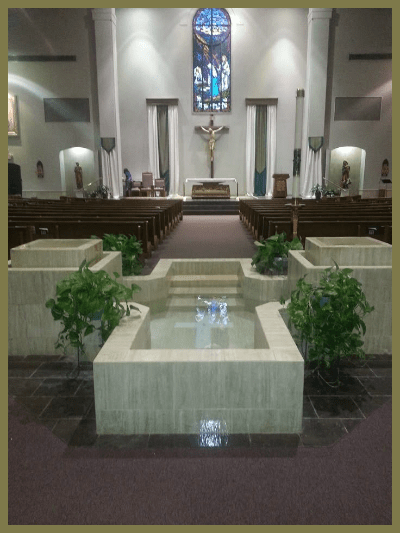
Hence, Baptism serves a dual purpose: it offers forgiveness of sins and facilitates regeneration. It is essential to understand that justification and sanctification are closely linked. Through baptism, our relationship with God is restored to its intended state, which was disrupted by Adam’s fall from grace. The New Testament emphasizes that baptism leads to the cleansing of our hearts from an evil conscience, as noted in Hebrews 10:22. This clean conscience arises from genuine repentance and spiritual renewal. Additionally, the gifts of the Holy Spirit play a vital role in transforming our inner disposition. With the forgiveness granted through baptism comes a process of inner cleansing and healing. According to St. Paul, without the help of the Holy Spirit, it is impossible to shed the old self and embrace the new self. Thus, baptism is not merely concerned with the outward aspects of salvation but focuses on our inner lives. It can be seen as the “circumcision” of the heart, as described in Colossians 2:11-12, signifying a profound spiritual transformation within the New Covenant.
The initial grace of justification and forgiveness requires daily renewal of our inner selves to be genuinely beneficial. Repentance should be accompanied by a sincere desire for personal amendment as we progress in holiness and strive for divine perfection. Salvation is not simply a result of a stative conversion and faith in what Christ has achieved for us; instead, it involves exercising a commitment and a steadfast perseverance in grace, especially now that our Lord and Savior has opened the gates of heaven for us. Baptism plays a crucial role in salvation as it confers the necessary graces for our interior transformation through the sacrament. It is not merely a symbolic act signifying our faith in Christ, but marks the beginning of a lifelong journey of justification for each individual. This transformative process is made possible through the redeeming merits of Jesus Christ, our Lord.
Early Sacred Tradition
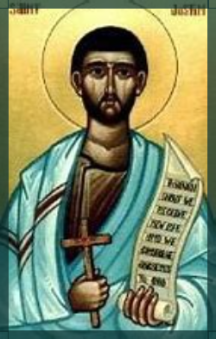
St. Justin Martyr (A.D. 155)
Dialogue with Trypho, 88:4
“He stood in need of baptism, or of the descent of the Spirit like a dove; even as He submitted to be born and to be crucified, not because He needed such things, but because of the human race, which from Adam had fallen under the power of death and the guile of the serpent, and each one of which had committed personal transgression. For God, wishing both angels and men, who were endowed with freewill, and at their own disposal, to do whatever He had strengthened each to do, made them so, that if they chose the things acceptable to Himself, He would keep them free from death and from punishment; but that if they did evil, He would punish each as He sees fit.”

Tertullian (A.D. 208)
On the Soul, 40
“Every soul, then, by reason of its birth, has its nature in Adam until it is born
again in Christ; moreover, it is unclean all the while that it remains without this
regeneration; and because unclean, it is actively sinful, and suffuses even the
flesh (by reason of their conjunction) with its own shame.”
Origen (post A.D. 244)
Homily on Leviticus, 8:3
“Baptism is given for the remission of sins; and according to the usage of the
Church, Baptism is given even to infants. And indeed, if there were nothing in
infants which required a remission of sins and nothing in them pertinent to
forgiveness, the grace of baptism would seem superfluous.”

St. Cyprian of Carthage (c. A.D. 250)
Epistle to Fidus, 68[64]:5
“If, in the case of the worst sinners and of those who formerly sinned much
against God, when afterward they believe, the remission of their sins is granted
and no one is held back from Baptism and grace, how much more, then, should
an infant not be held back, who, having but recently been born, has done no sin,
except that, born of the flesh according to Adam. He has contracted the
contagion of that old death from his first being born. For this very reason does
he approach more easily to receive the remission of sins: because the sins forgiven
him are not his own but those of another [from Adam].

St. Ephraem of Syria (A.D. 350)
Hymns on the Epiphany, 10:1
“Adam sinned and earned all sorrows; likewise, the world after His example, all
guilt.–And instead of considering how it should be restored,–considered how its
fall should be pleasant for it.–Glory to Him Who came and restored it!”
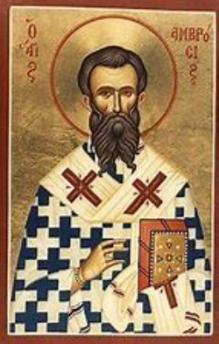
St. Ambrose of Milan (A.D. 387)
Abraham, 2,11:79
“‘Unless a man be born again of water and the Holy Spirit, he cannot enter
the kingdom of God.’ No one is expected: not the infant, not the one prevented
by necessity.”
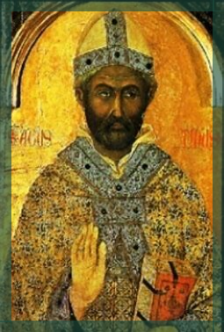
St. Augustine of Hippo (A.D. 415)
On Nature and Grace, 4
“This grace, however, of Christ, without which neither infants nor adults can be
saved, is not rendered for any merits, but is given gratis, on account of which it
is also called grace. ‘Being justified,’ says the apostle, ‘freely through His blood.’
Whence they, who are not liberated through grace, either because they are not
yet able to hear, or because they are unwilling to obey; or again because they did
not receive, at the time when they were unable on account of youth to hear, that
bath of regeneration, which they might have received and through which they
might have been saved, are indeed justly condemned; because they are no
without sin, either that which they have derived from their birth, or that which
they have added from their own misconduct. ‘For all have sinned’–whether in
Adam or in themselves–“and come short of the glory of God.’ ”
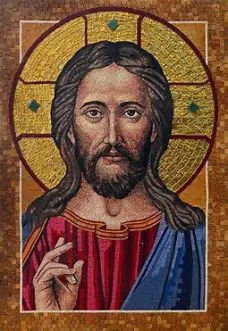
He that believeth and is baptized shall be saved:
but he that believeth not shall he condemned.
Mark 16, 16

Pax vobiscum
 Eternally Catholic
Leave a comment